
Industrial technology for manufacturers is the connected set of software, controls, robotics, sensors, equipment and security a plant uses to plan, run and improve production. For a buyer, the practical question is how these parts depend on each other, because a change to one system usually changes what several others must do, and that shapes project cost and risk.
Plant engineers, operations managers, controls engineers and procurement leads at U.S. manufacturers who are scoping a project or preparing an RFQ often start with one gap, such as a line that needs better data or a manual process that needs automating, and then discover how many other systems that gap touches. What follows explains what each category does, how the categories connect, and which factors shape cost and project risk, with a practical scenario or trade-off for each.
Where a Project Fits in the Industrial Technology Landscape
Industrial technology is easiest to evaluate as layers rather than as separate purchases.
| Layer | Category | Main job |
|---|---|---|
| Data and planning | Manufacturing Software & Enterprise Systems | Planning and execution data |
| Control | Industrial Automation & Controls | Running machines and processes |
| Motion and inspection | Robotics & Machine Vision | Motion, handling and inspection |
| Connectivity | Smart Factory IIoT & Connectivity | Carrying data off equipment |
| Protection | Industrial Cybersecurity & OT Security | Protecting connected systems |
The physical side includes Industrial Equipment & Custom Machinery, Warehouse Automation & Material Handling, Industrial Energy & Infrastructure, Quality Testing & Compliance and Specialized Manufacturing Services. Industrial Engineering & Integration ties them together.
These layers interact. Adding IIoT sensors to a line, for instance, changes what data reaches the MES and what the OT security plan has to protect. A sensor project that looks self-contained on paper can therefore carry software and security work with it. Where a project starts depends on the facility's current systems, its type of production and the specific gap being addressed.
Choosing the Software That Plans and Runs Production
Manufacturing software and enterprise systems form the data layer of a plant. Two systems sit at its center.
MES and ERP
MES software (Manufacturing Execution System) tracks and manages production on the shop floor as it happens, connecting planning systems to physical equipment. Manufacturing ERP software (enterprise resource planning) brings business functions such as inventory, procurement, scheduling and finance together across the organization.
The two exchange data, and connecting them is a frequent requirement in software projects. A common scenario: a plant with an established ERP adds an MES, and much of the project effort goes into deciding which system owns which data and how orders and production results pass between them.
Maintenance, quality and the operator
A CMMS (Computerized Maintenance Management System) schedules and records maintenance work. Manufacturing QMS software (Quality Management System) keeps quality records. A connected worker platform and digital work instructions software deliver instructions, checklists and guidance to operators on the floor, a fit for facilities moving away from paper. Manufacturing training software organizes structured training for operators and technicians.
The trade-off in this group is often breadth against fit: one platform spanning several functions means fewer connections to maintain, while separate tools for each function may match each department's needs more closely but add integration points. Independent software comparisons and alternatives help buyers place vendors in these categories side by side.
Understanding the Controls and Robotics on the Floor
The controls stack is built in layers, and each one has a distinct job.
PLC, HMI and SCADA
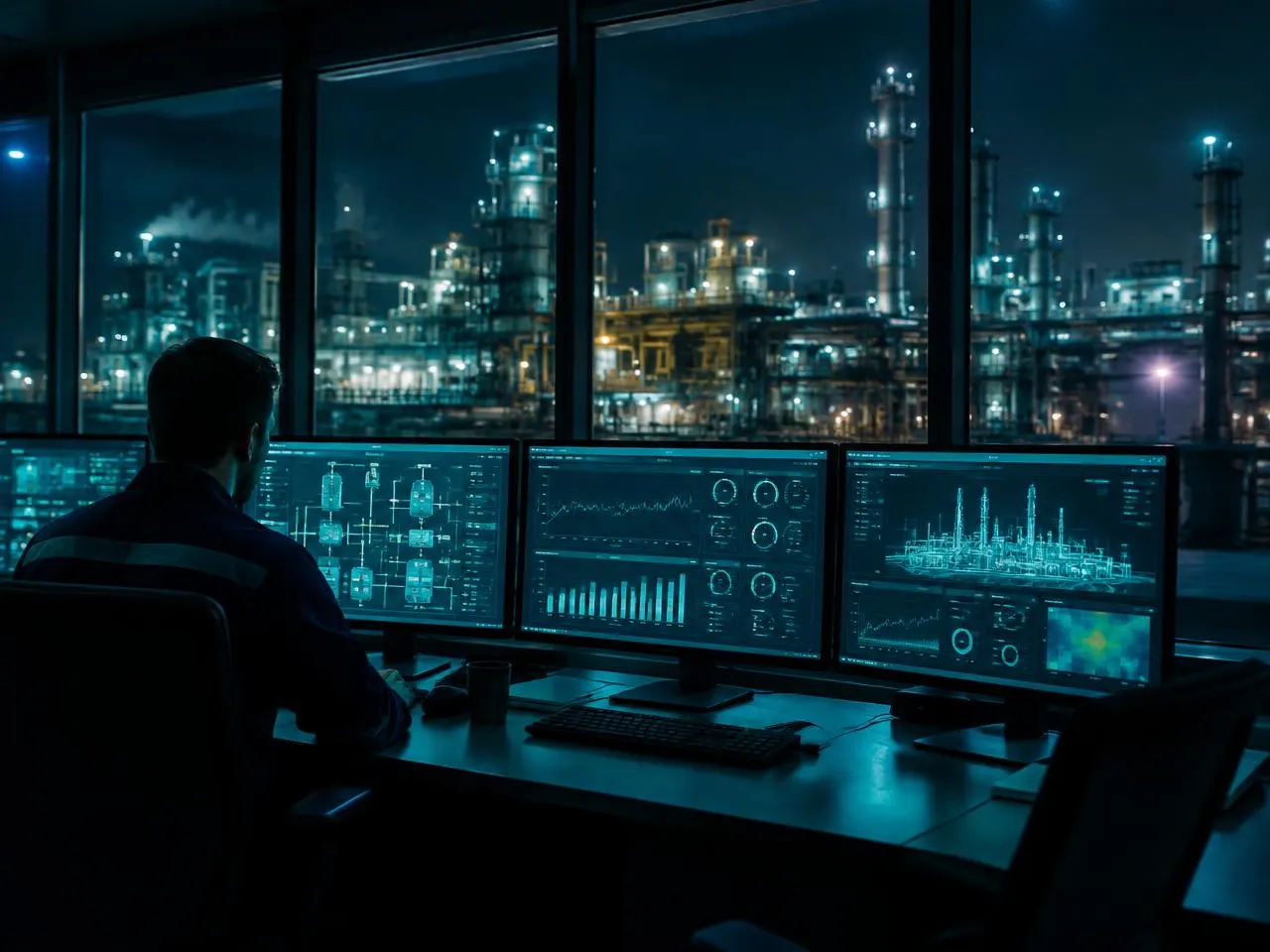
At the machine level, a PLC (Programmable Logic Controller), a ruggedized industrial computer, executes the control logic for machines and processes. Operators see and interact with that process through an HMI (Human-Machine Interface), the screen, panel or touchscreen at the machine. Above both sits SCADA (Supervisory Control and Data Acquisition), which collects data from PLCs and field devices across a facility, or across several sites, and presents it for monitoring and control.
Data moves upward in a chain: field devices feed PLCs, PLCs feed SCADA, and SCADA feeds higher-level systems such as MES. For a buyer, the practical consequence is that a change at one level, such as replacing a PLC, can affect the screens, the supervisory system and the software that depends on its data.
Robots and vision
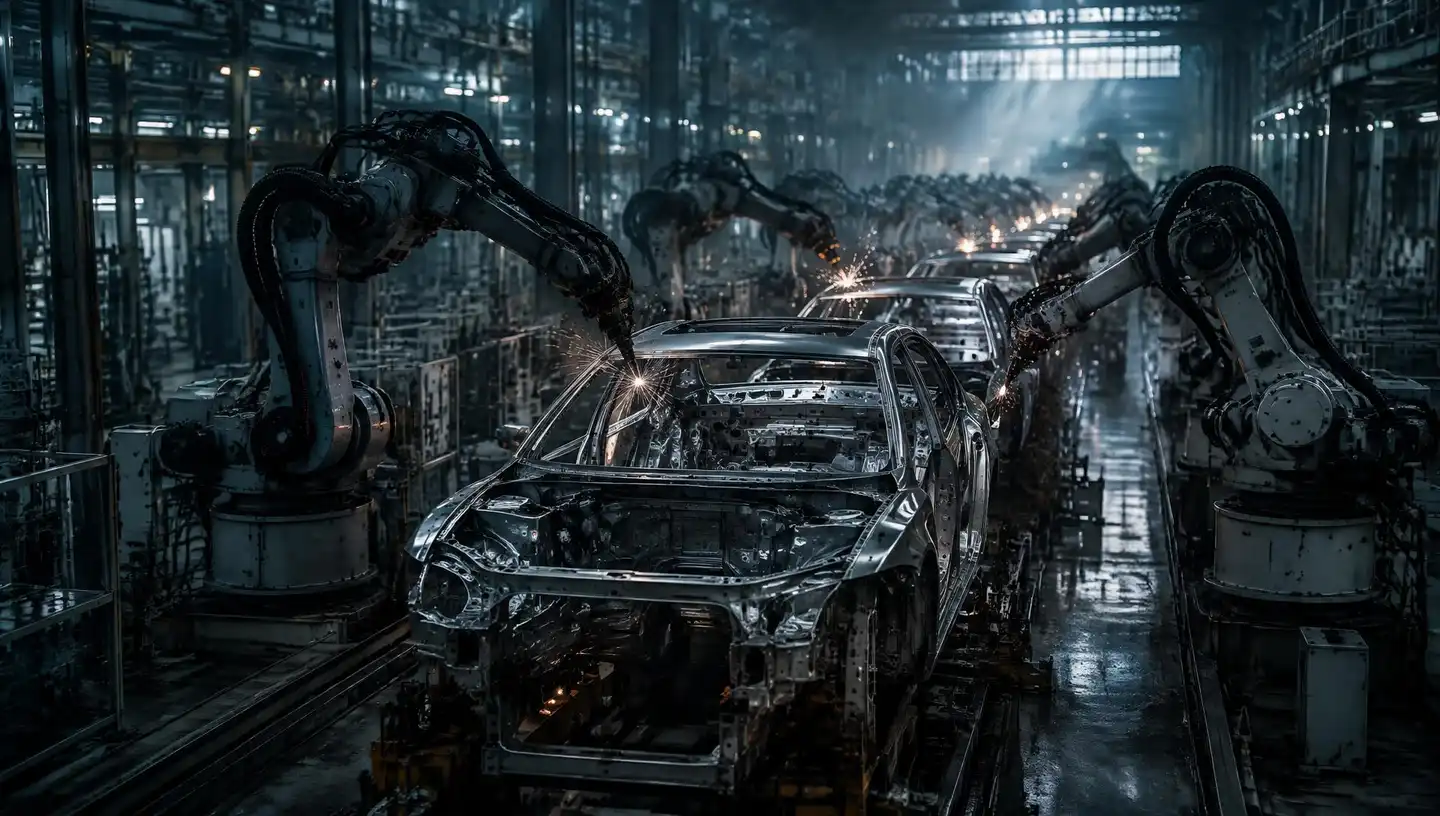
A cobot (collaborative robot) is designed to work alongside people in a shared workspace, typically with built-in force and speed limits. Traditional industrial robots operate inside guarded cells. The choice between them is a trade-off between sharing floor space with people and running inside a dedicated, guarded area.
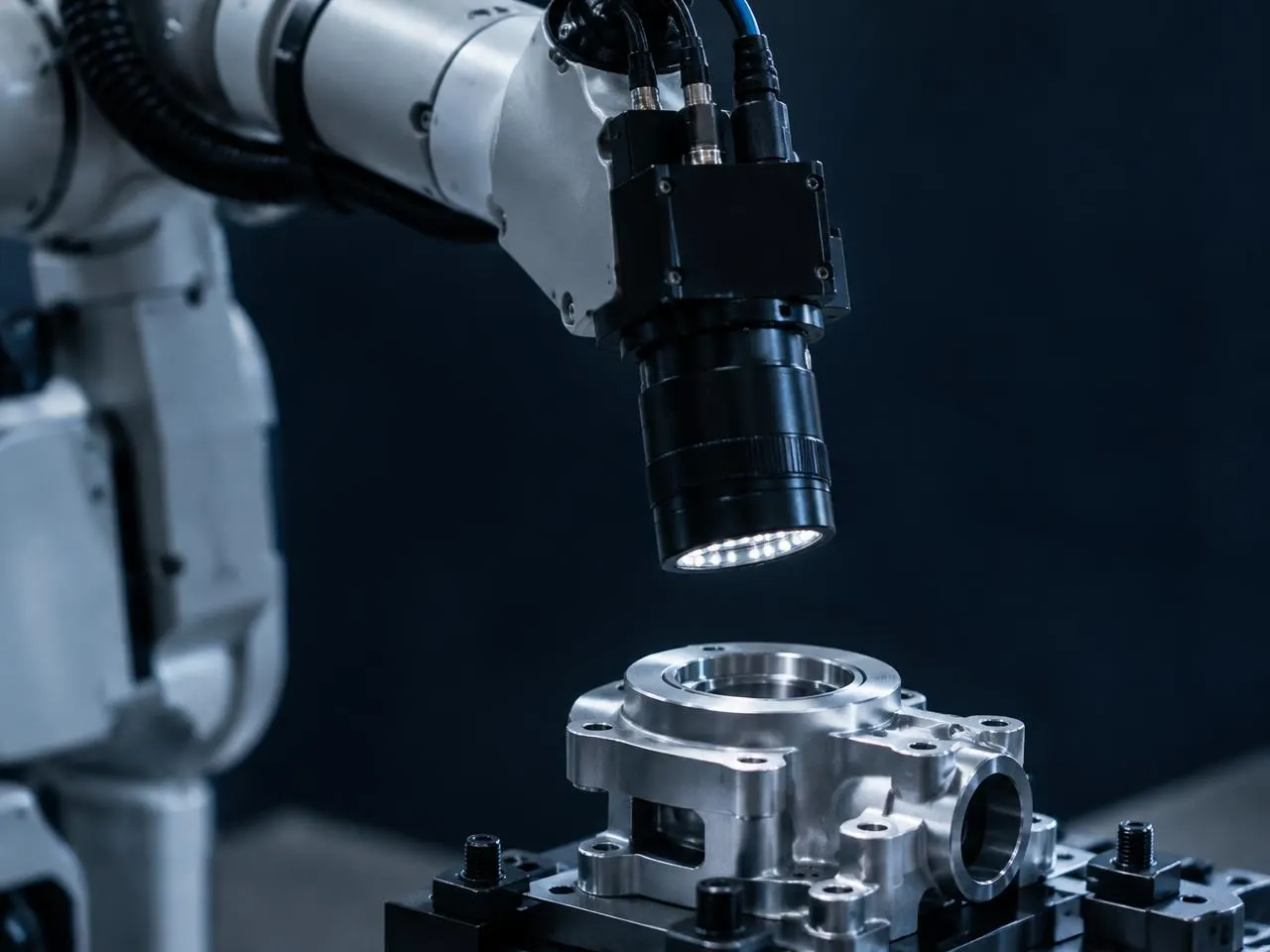
Machine vision uses cameras to inspect parts, guide robots, read codes or verify assembly, supporting quality inspection, pick-and-place guidance and traceability. A typical pairing is a robot that uses vision guidance to pick parts and the same camera data to support inspection. How a specific cell is guarded and configured is set by the equipment maker's documentation and the applicable safety rules.
Connecting Equipment to Data, and Protecting What Gets Connected
IIoT (Industrial Internet of Things) refers to sensors, edge devices and gateways that collect data from equipment and processes and send it to software for monitoring, analytics or control. A digital twin is a software model of an asset, a process or a whole facility, updated with real-time or near-real-time data and used for monitoring, simulation and predictive analysis.
A practical decision factor here is where the data goes. The same sensor data can feed a monitoring screen, an analytics model or a digital twin, and each destination sets different demands on the network and on the systems the data must reach, such as the MES. A project that starts with a monitoring screen and later grows into analytics or a digital twin may need more from the network than the first phase did.
Connectivity has a cost in exposure. IIoT relies on an industrial network, wired and wireless. OT (operational technology) is the hardware and software that runs physical processes, and OT security is the cybersecurity of those control systems and networks. Connecting OT systems to IT networks or the internet widens the attack surface, the set of points where a threat can enter. The trade-off is direct: each new connection that brings data out of the plant floor is also a point that the security plan has to account for.
Two federal agencies publish cybersecurity material that manufacturers consult: the National Institute of Standards and Technology (NIST, nist.gov) and the Cybersecurity and Infrastructure Security Agency (CISA, cisa.gov).
Scoping Equipment, Material Flow, Energy and Outside Services
The physical layer is where most capital sits, and each category links back to software and controls.
Equipment and material handling
Industrial Equipment & Custom Machinery spans production equipment, custom-built machines and the work of bringing new equipment into an existing line. Bringing a new machine into an existing line typically means connecting it to the controls and software already in place, not only setting it on the floor.
Energy
Industrial Energy & Infrastructure spans energy monitoring, compressed air, power distribution and utility systems; the U.S. Department of Energy (energy.gov) is the federal agency associated with industrial energy use. One decision factor ties energy to the rest of a project: the power available at the site is also one of the site conditions that shape what new equipment can be installed. In practice, an equipment or automation project can turn into an energy and infrastructure question if the site's power distribution does not match what the new equipment needs.
Quality and specialized work
Quality Testing & Compliance spans inspection equipment, measurement systems and compliance records. A quality project often reaches beyond inspection hardware, because the records it produces belong in the QMS software, and machine vision on the line can supply inspection data. Specialized Manufacturing Services takes in outsourced production such as contract manufacturing, finishing and heat treatment, an alternative for work a plant chooses not to bring in-house.
Integration
Industrial Engineering & Integration is the engineering work of connecting controls, software and equipment into a working whole. Integration complexity is a primary driver of a project's cost and schedule, which is why the scope of integration belongs at the start of any evaluation.
Weighing Cost, Risk and Suppliers for a Facility
The same factors drive cost and project risk across nearly every category:
- Integration scope: how many existing systems the new technology has to connect with.
- Current condition: the age and state of the equipment and software already in place.
- Site conditions: space, network and power available at the location.
- Part variety: the number of SKUs or part numbers the system must handle.
- Uptime during the project: how much production has to continue through installation and commissioning.
- Internal resources: the engineering staff available to support the work.
TCO (total cost of ownership) is the full cost of a technology over its useful life: acquisition, installation, commissioning, training, maintenance and eventual replacement, not only the purchase price. Commissioning is the process of confirming that installed equipment or software performs as specified before it is handed over for production.